
We Sell SEO. Here's Why Most Practices Shouldn't Buy It
If you run a practice with one or two practitioners, you don't need to pay an agency every month for SEO or Google Ads. We sell both, so here's why I tell most practices not to buy them, and what to do instead.
Rather see how this works for your own practice? Watch the short breakdown →
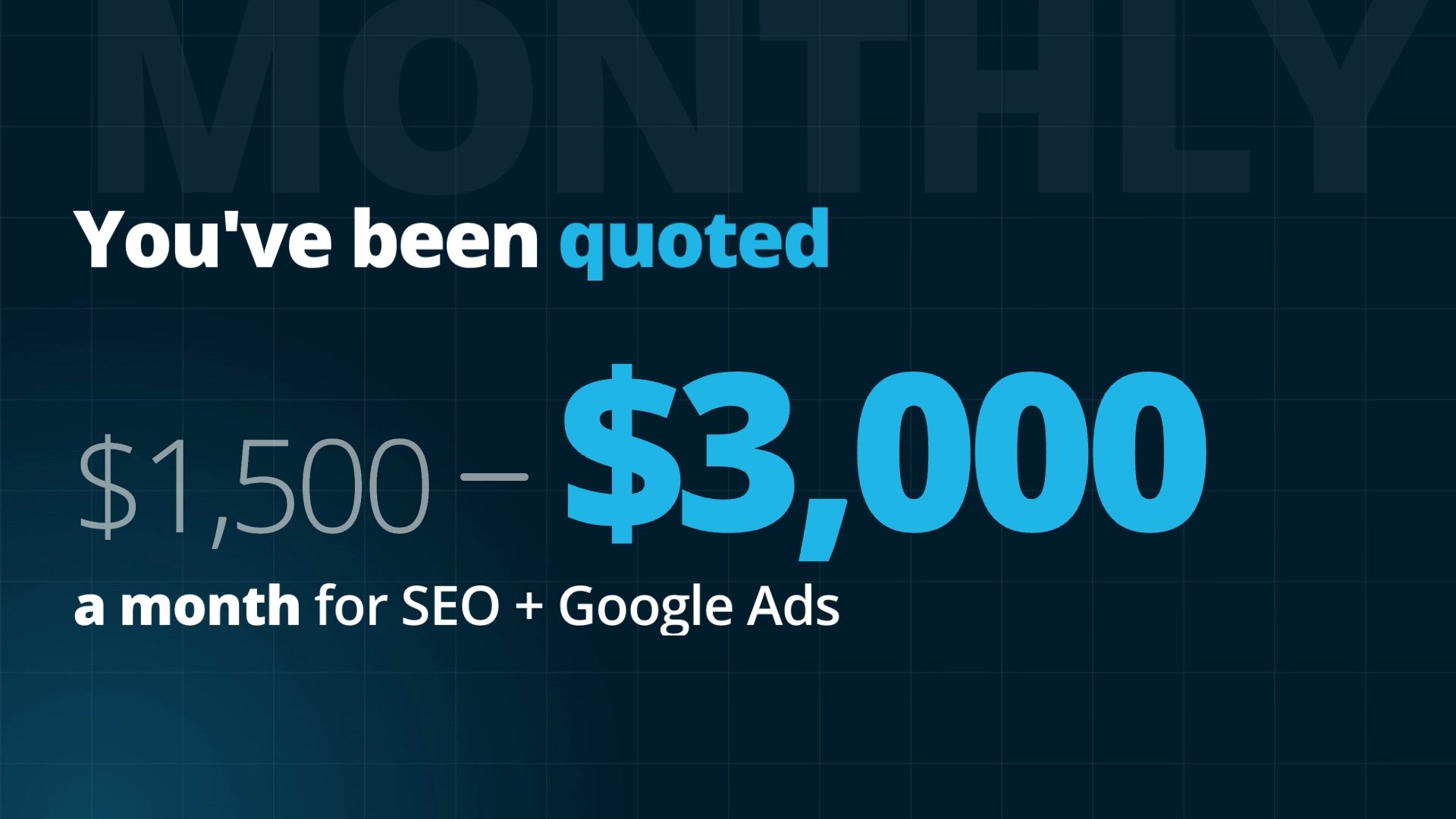
You built your practice on GP referrals and word of mouth. That got you to one or two practitioners. But you can’t turn word of mouth up when you need more patients, so sooner or later someone tells you that you need SEO and Google Ads for $1,500 to $3,000 a month.
We sell SEO, and we run Google Ads for practices too, so it probably sounds odd to hear me tell most practices not to buy them.
I spent 12 years as a sales and marketing manager, judged on the sales I brought in, so I judge marketing by new patients, not clicks. And we keep seeing one-location practices paying every month for SEO and ads they don’t need. Most agencies won’t tell you that, because they live off the monthly fee.
The chiro who stopped his SEO
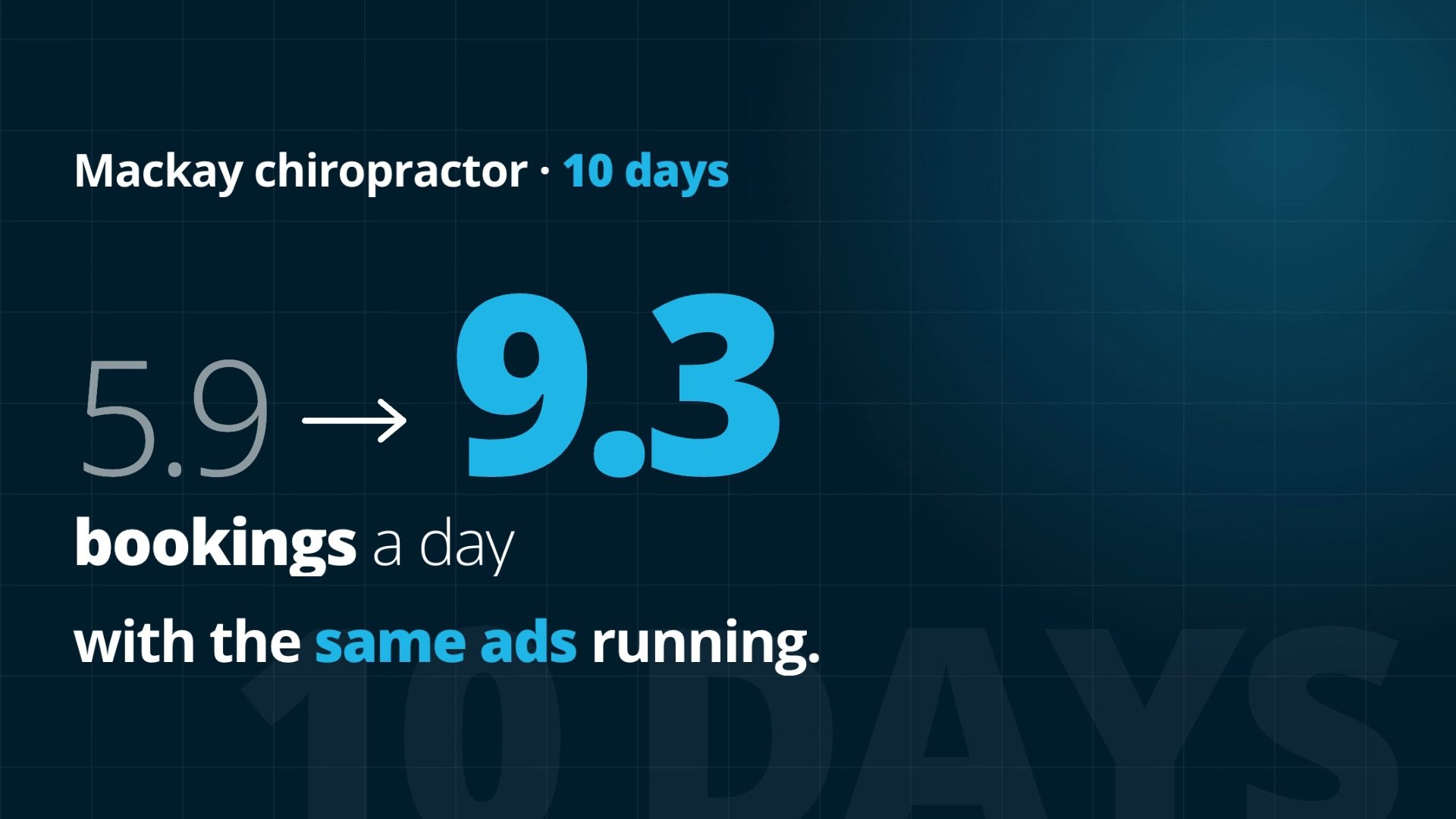
Take a chiropractor in Mackay we worked with. He was paying for SEO and Google Ads when we rebuilt his website. Within 10 days his bookings went from 5.9 a day to 9.3 a day, with the same ads running.
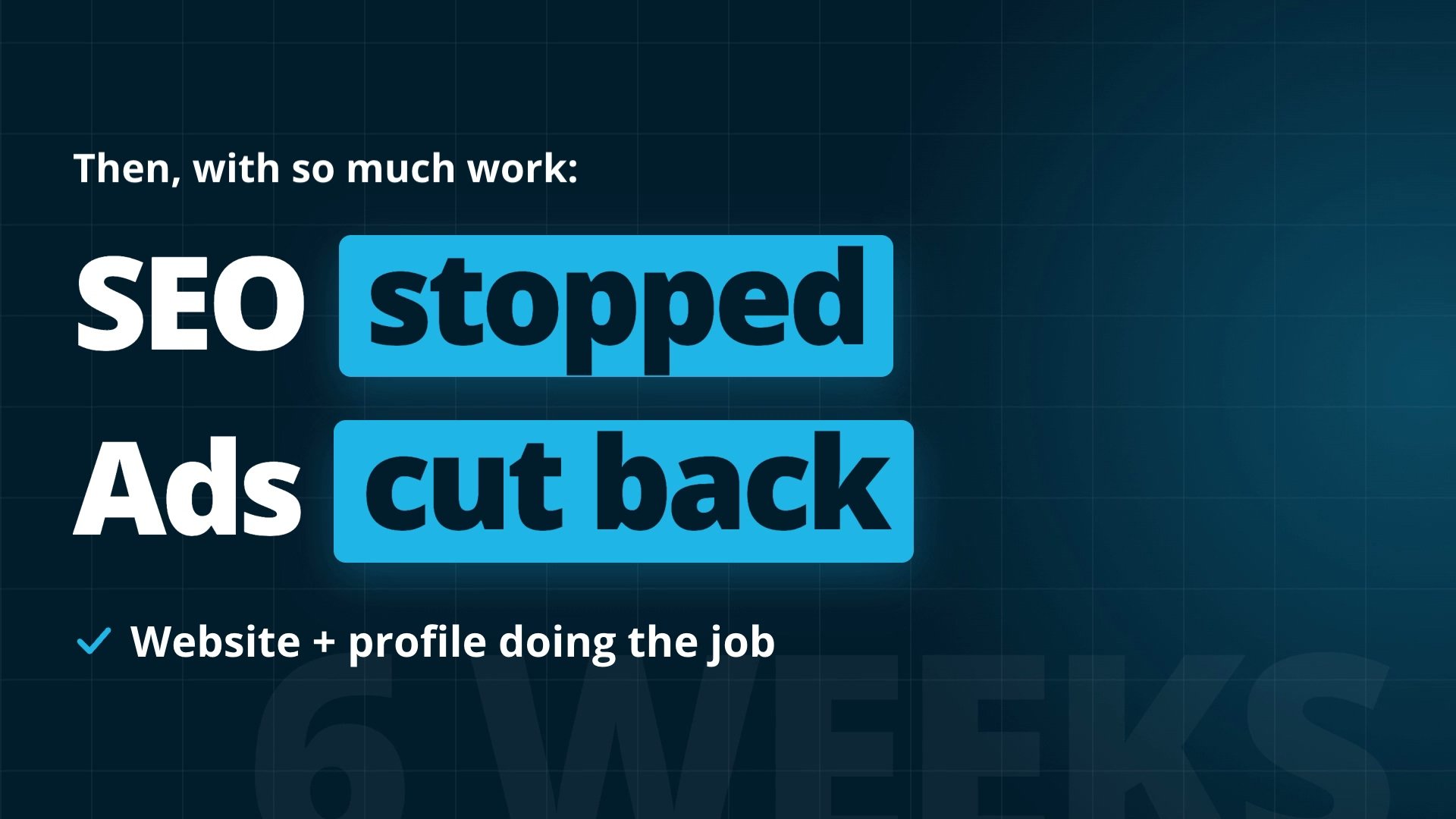
Later on he had so much work that he stopped his SEO and cut back his ads. I’ll show you what we changed for him further down.
The growth ladder: what to pay for, and when
We use something we call the New Patient Growth Ladder to decide what a practice should spend money on. It has three rungs:
- Rung one is one or two practitioners at one location. All you need is your website and your Google Business Profile, built properly and linked together.
- Rung two is when you’re adding practitioners or opening a second location. That’s when you add Google Ads.
- Rung three is several locations and several disciplines. That’s when you add SEO on top of your ads.
Most practices are on rung one, and most never need to go higher.
Why rung one is enough
Rung one has two parts, and they only work properly together.
The first part is your Google Business Profile, your listing on Google Maps. A lot of people who search “physio near me” pick a practice straight from the map. And when someone asks ChatGPT for a good physio nearby, it reads that same map profile first.
The second part is your website. Google and the AI tools check your website to see whether your profile is telling the truth.
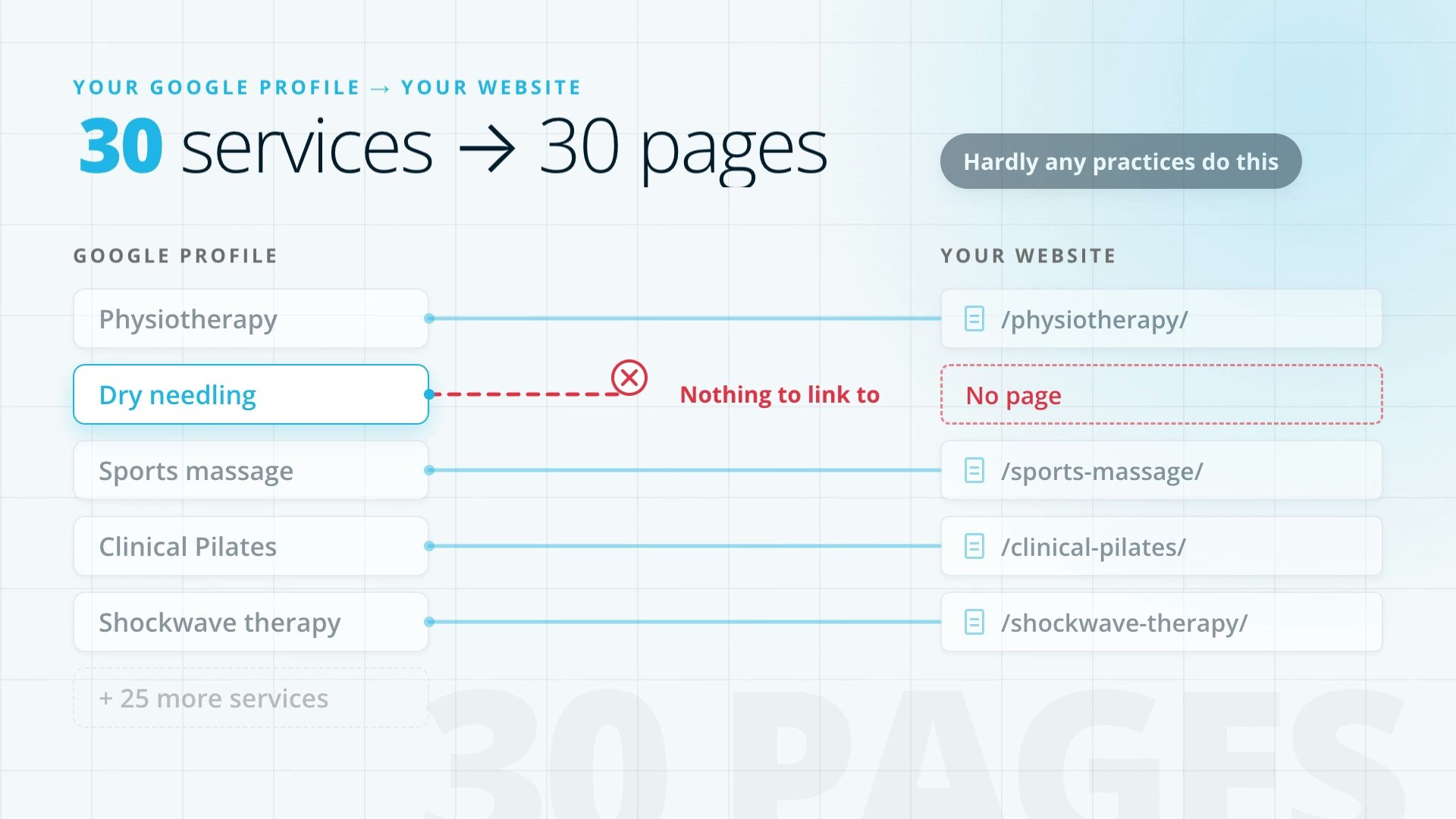
You can list up to 30 services on your profile, and each one should link to its own page on your website. Hardly any practices have done this. If your website has no page for dry needling, the dry needling service on your profile has nothing to link to, and a great profile that points to a weak website is a toothless tiger.
Your website also has to get people to book. Most practices already get visitors from Google, the map, ads, referrals and people who type the address straight in, and the website probably loses most of them. The pages don’t show patients that the practice understands their problem and can fix it, so they see no reason to book. The ones who do try end up in a booking system like Cliniko, which makes them work out which practitioner and which appointment type they need, and a lot of them give up and move on.
Building your website and profile properly and linking them together is a one-off job. We do the SEO while we build, so there’s no monthly SEO to pay for, and most practices your size don’t need Google Ads either.
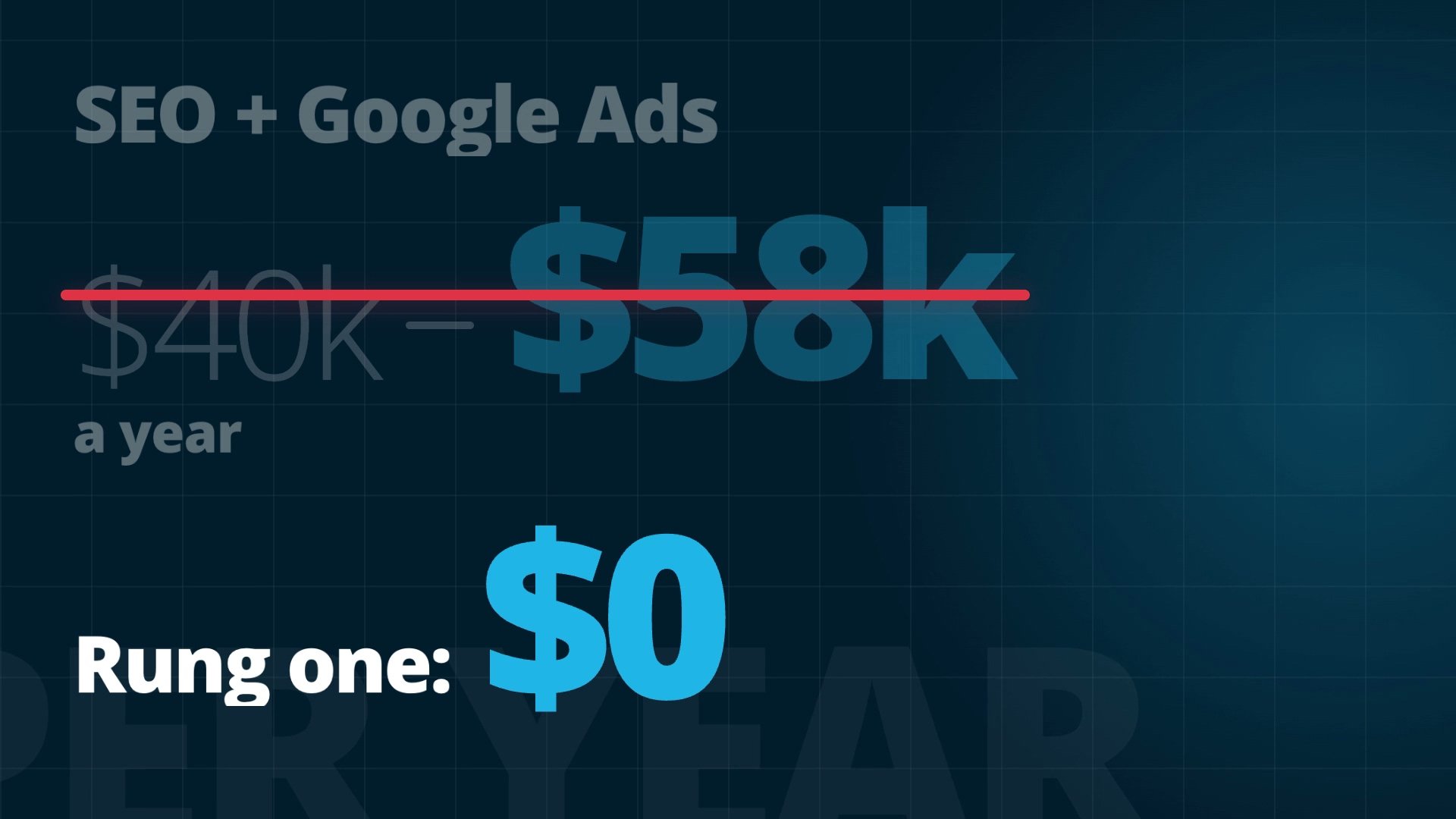
A practice paying for SEO and Google Ads could be spending $40,000 to $58,000 a year. On rung one you don’t need to spend any of it.
What we changed for the chiro
He had every one of those problems. He’s very good at dry needling, which not many chiropractors near him offer, but his old website barely mentioned it.
So we rebuilt the website from the ground up, with a page for each of his most profitable services, dry needling included, and set each page up for Google and the AI tools. We linked each service on his Google Business Profile to its matching page. We wrote every page so patients could see he understood their problem and could help, and so they wanted to book.
Then we made booking simple. Patients still book through the same booking system, but the website walks them through choosing the right practitioner and appointment first, so they don’t get stuck.
His Google traffic only went up about 10%. Clicks on his Book Now button went from 8.7 a day to 29.
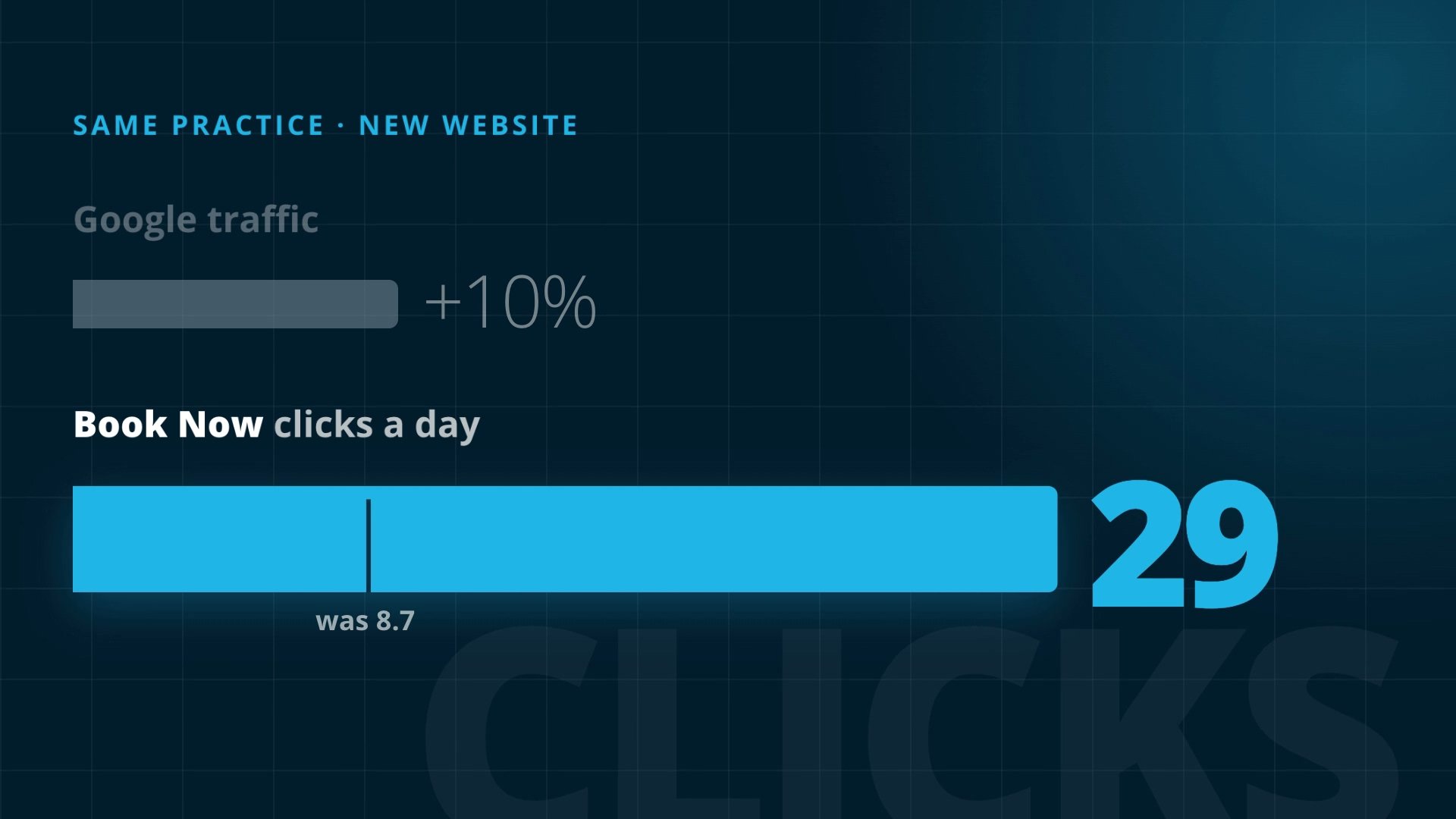
Over the first six weeks, on the same ad spend, his completed online bookings went from 292 to 351. Then he had so much work that he stopped his SEO and cut back his Google Ads, because his website and Google profile were doing the job.
Rung two: when Google Ads earns its money
When you add a practitioner or a second location, you need more patients than your website and profile bring in, and you need them quickly so the new diary fills.
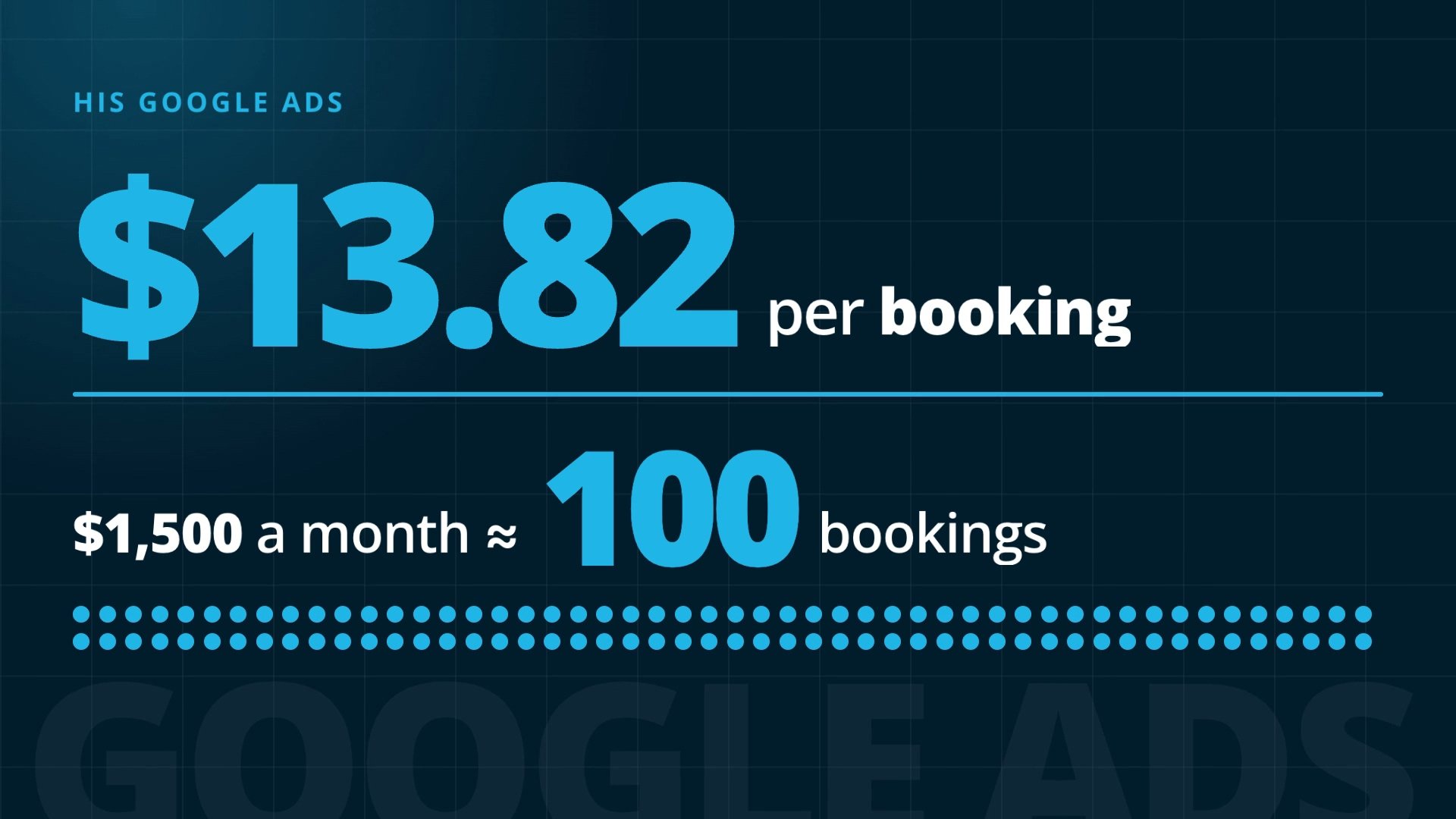
That’s when Google Ads earns its money. It’s the fastest return you’ll get, and you can measure every dollar. The chiropractor’s bookings from his ads cost $13.82 each, so $1,500 a month would buy about 100 of them.
If someone is selling you SEO at this stage, put that money into Google Ads instead.
Rung three: when SEO is worth paying for
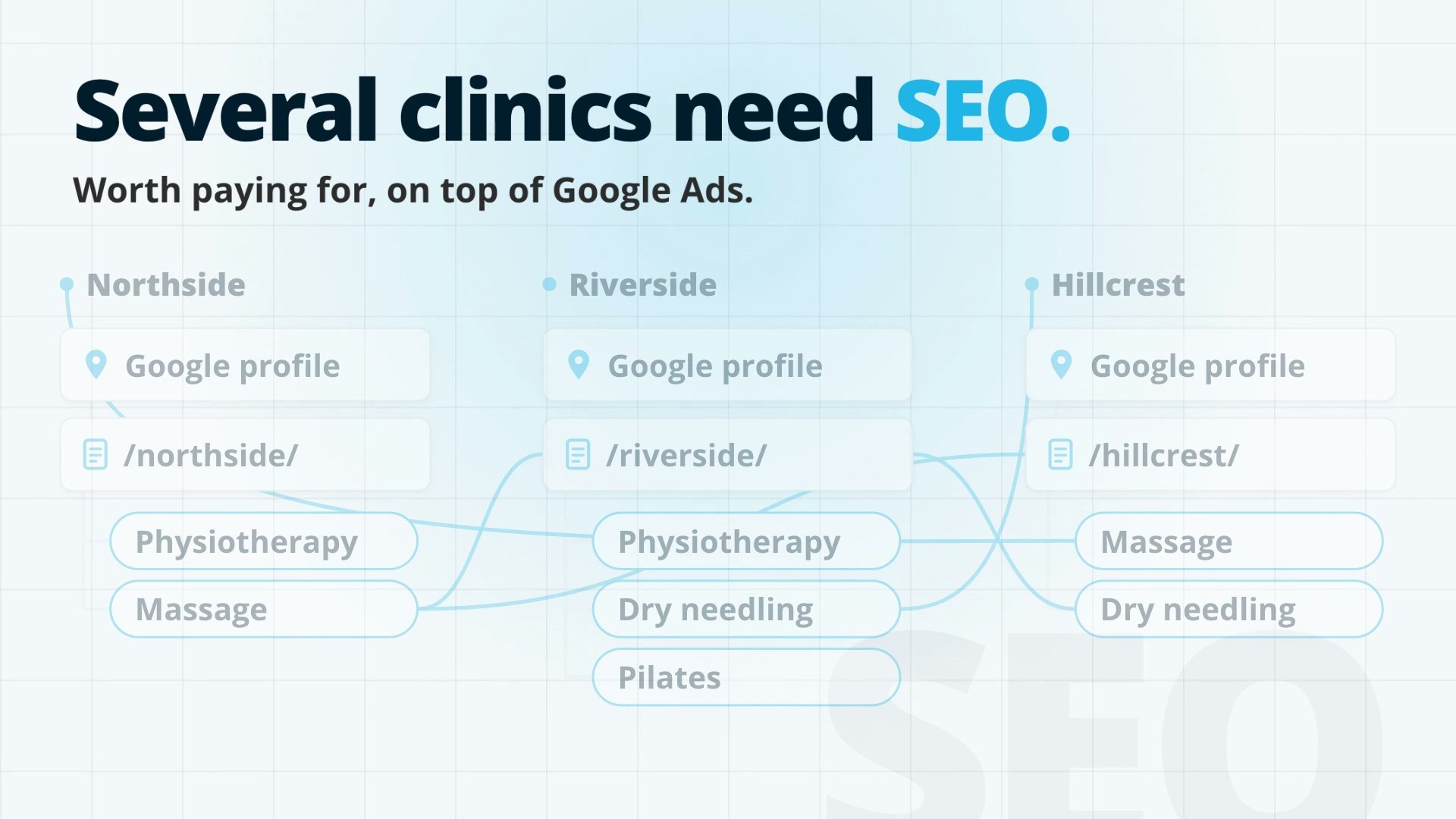
Once you have several locations and several disciplines, your marketing gets a lot more complicated. You have a Google Business Profile for every location, a website with pages for every location, and services that change from clinic to clinic. Google has to work out which clinic offers which service in which suburb, and keeping all of that in order takes ongoing work.
That ongoing work is what SEO is, and at that stage it’s worth paying for on top of your Google Ads.
A one or two practitioner practice doesn’t have that problem. You have one location and one profile, and once your website and profile are built properly and linked together, Google already knows what you offer and where.
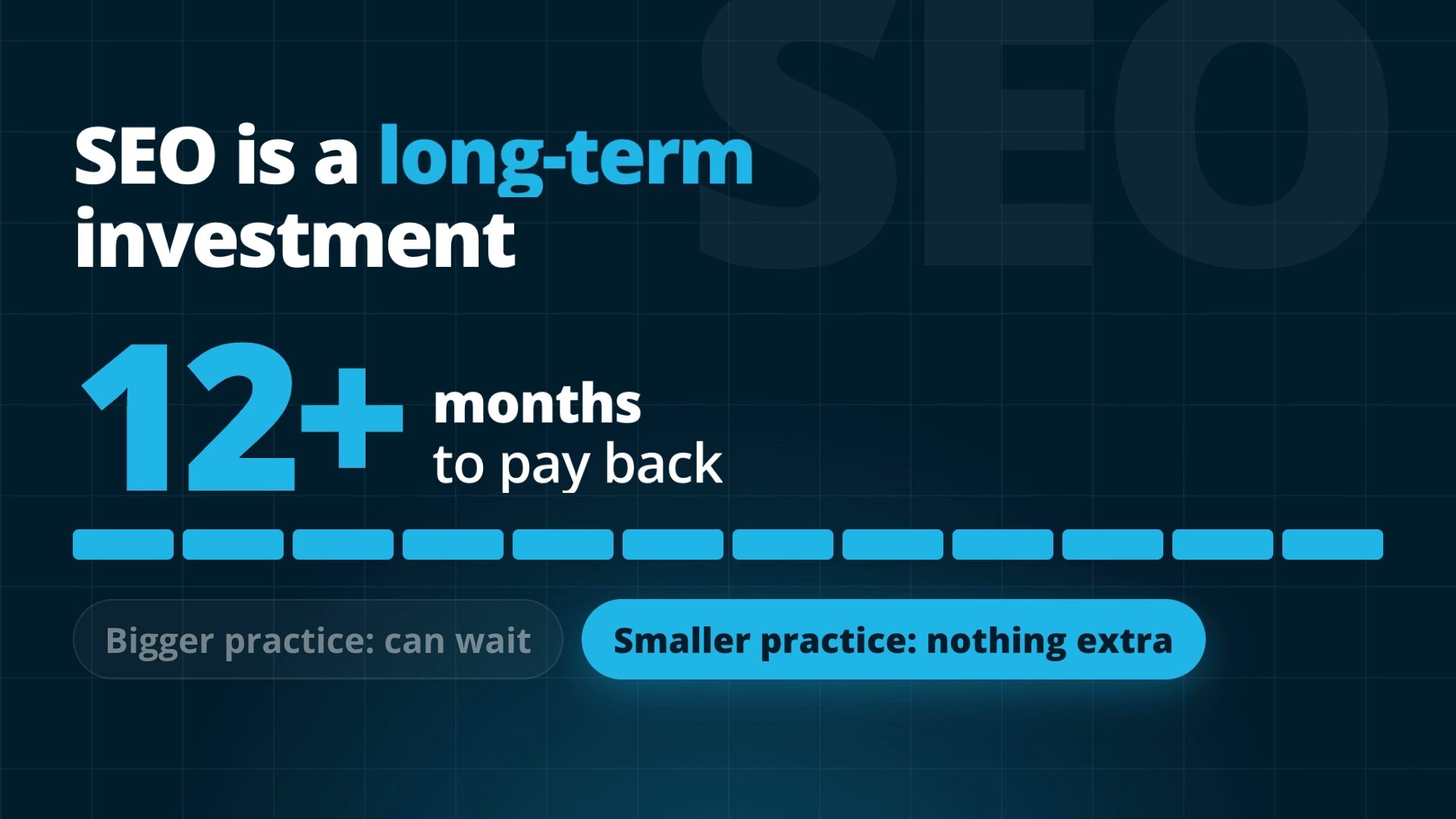
SEO is also a long-term investment that usually takes more than a year to pay back. A bigger practice can wait for that return. A smaller practice gets nothing extra for the money.
“Can’t my SEO person just fix the website I’ve got?”
You’ll know this one better than I do. A patient comes to you with a sore shoulder, but the cause is their posture. You can treat the shoulder every week and they’ll keep coming back.
Your website is the posture. If the foundation is wrong, SEO on top of it is treating the shoulder, and you keep paying to patch the same problem. That’s why we rebuild the website from the ground up.
What if the new website doesn’t bring in more patients?
I won’t promise you a number of new patients, and I’d be careful of anyone who does. We give you a dashboard that shows your new patient enquiries and bookings before and after the build, so you can see whether it worked without taking my word for it.
A lot of agencies talk about clicks, shares, likes and comments and go quiet when you ask about new patients. I wrote about a chiro paying $30,000 a year whose agency had never told him that number once. We care about new patients.
Is this for your practice?
If you have one or two practitioners at one location, rung one is probably all you’ll ever need. If you’re adding practitioners or a second location, you’ll add Google Ads, but you still start with rung one, because ads only work when the website underneath them gets bookings. And if you already run several locations and several disciplines, you need all three rungs in order: website and profiles first, then Google Ads, then SEO.
It’s not for you if you want the cheapest website you can find, or if you’re happy with where your practice is right now. Keep your money.
If it does sound like your practice, book a New Patient Growth Call and I’ll tell you honestly which rung you’re on. For most practices, that’s rung one.
Questions practice owners ask
Do I need SEO with one or two practitioners?
Usually not. With one location and one Google profile, a website and profile built properly and linked together tell Google what you offer and where. SEO is worth paying for once you have several locations and several disciplines.
When is Google Ads worth paying for?
When you're adding a practitioner or opening a second location and need the new diary filled quickly. Ads are the fastest return you'll get and you can measure every dollar, as long as the website underneath them gets bookings.
How long does SEO take to pay back?
Usually more than a year. A bigger practice with several clinics can wait for that return. A one-location practice gets nothing extra for the money.
Can't my current SEO person just fix my website?
If the website itself is the problem, SEO on top of it is like treating a sore shoulder every week when the cause is posture. You keep paying to patch the same problem. The fix is rebuilding the website properly.
Will I get locked into monthly fees?
No. The website is a one-off fee. On rung one you don't need a monthly SEO or Google Ads bill, and you own everything we build.
Ready to find your missing patients?
Book your free New Patient Growth Call
45 minutes on Zoom. Before the call I go through your website and your Google profile. On the call I show you the pages you're missing and how many searches each one could bring in. You keep the plan whether you work with us or not.
Book your Growth CallNot ready for a call?
Watch how it works first
A short video on why practices with no SEO retainer are getting more new patients from Google and ChatGPT.
Watch the video