
This Chiro Pays $30,000 a Year for Marketing and Gets Zero New Patients
Thirty years in practice, number two on Google Maps, close to $30,000 a year on his website, SEO and Google Ads. In his words: "We just don't get anything from the internet at all." Here's what I found, and the five fixes.
Rather see how this works for your own practice? Watch the short breakdown →
He’s a solo chiropractor. Great reputation, been there forever, patients love him. He’s got thousands of patients on his books.
And for the last 18 months, almost nothing has come from online.
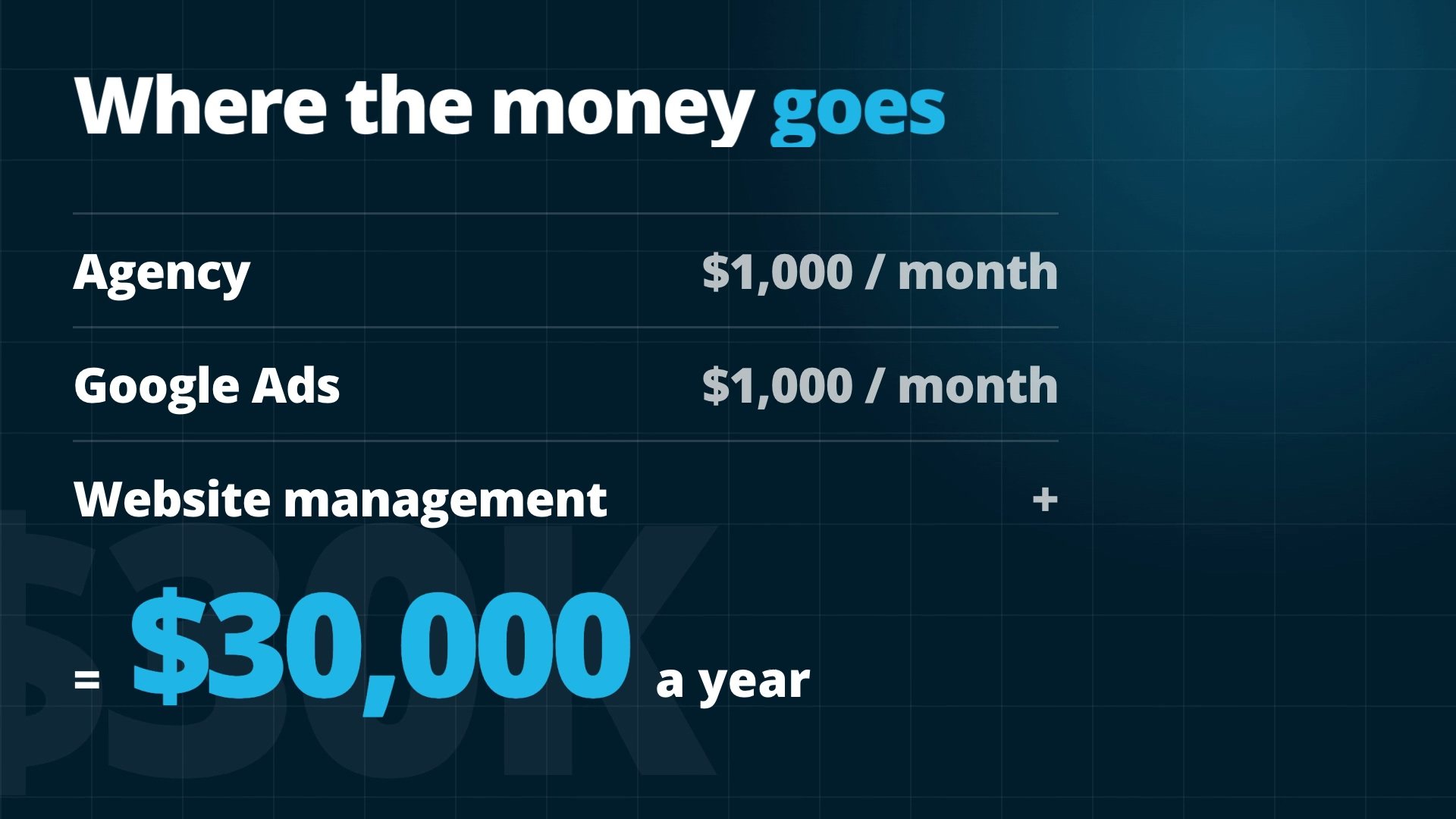
He pays his agency about $1,000 a month. Another $1,000 or so goes on Google Ads. Add website management and it’s close to $30,000 a year.
And the odd thing is he’s number two on Google Maps in his own suburb. People can see him. Almost nothing books.
Next year he wants to bring on an associate. He told me: “I’ve got the work to keep me busy. I just don’t have the new patient load to build them. It feels like we’re just invisible online.”
If that sounds like your practice, keep reading, because none of these five fixes are hard.
I’m not naming him or showing his real website. It’s his business. The screens in the video are a made-up practice with the exact same problems.
Fix 1: Ask your agency for one number
The first thing I asked him was: “How many new patients does your agency say they got you last month?”
He didn’t know. They’d never told him.
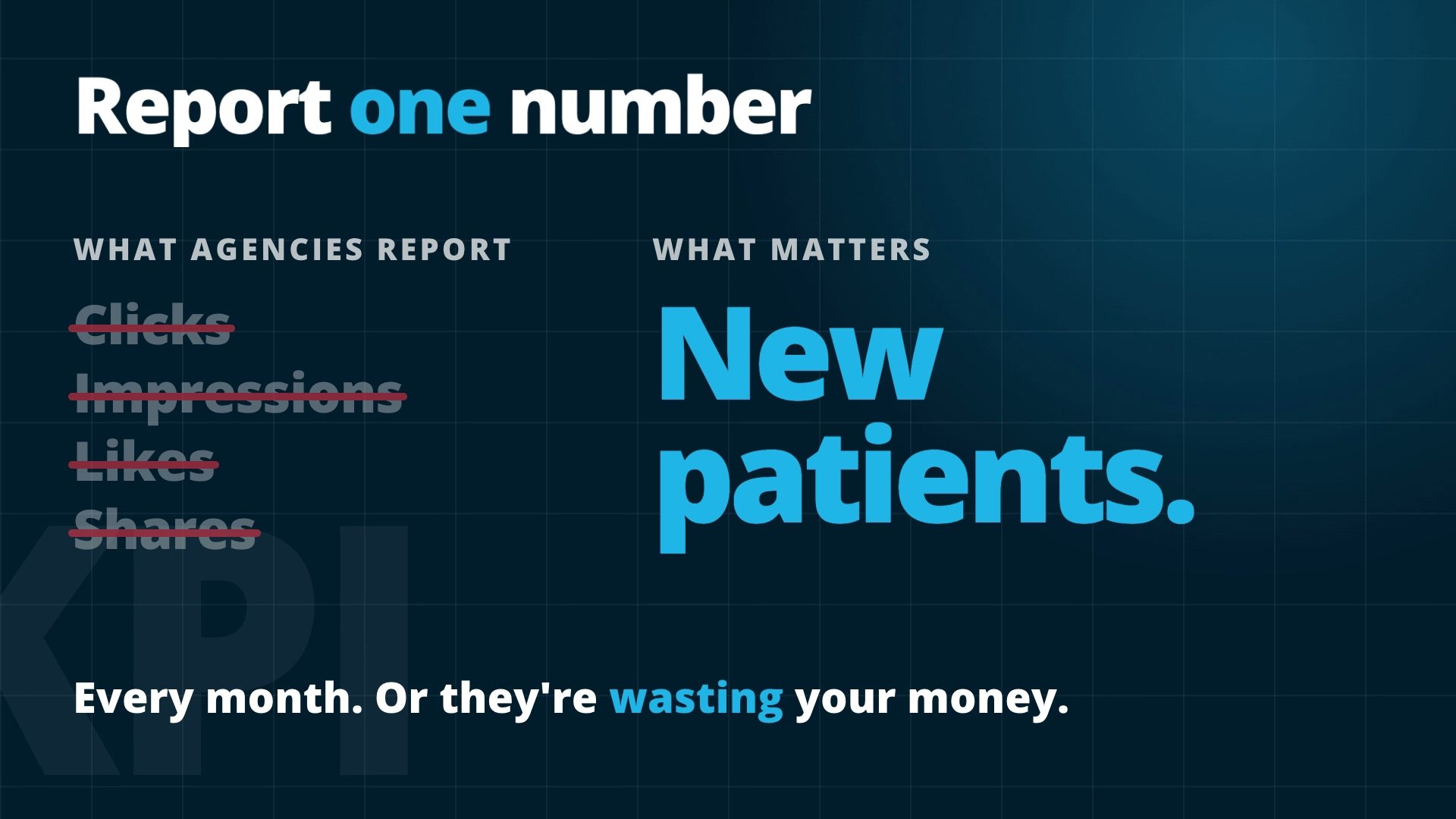
Most agencies report on clicks, impressions, likes, comments and shares. I spoke to another practice owner last week whose old agency did exactly that. Six months of reports and no idea how many patients came from any of it.
The KPI for any agency you work with is one number: how many new patients did your work bring us? An agency that won’t bring you that number every month is wasting your money.
So email your agency today with one question: “How many new patients did your work bring us last month?” If they send back a report full of clicks, you’ve got your answer.
Fix 2: Match your Google profile to your website pages
This is the biggest reason he’s invisible, and almost every practice I look at has it.
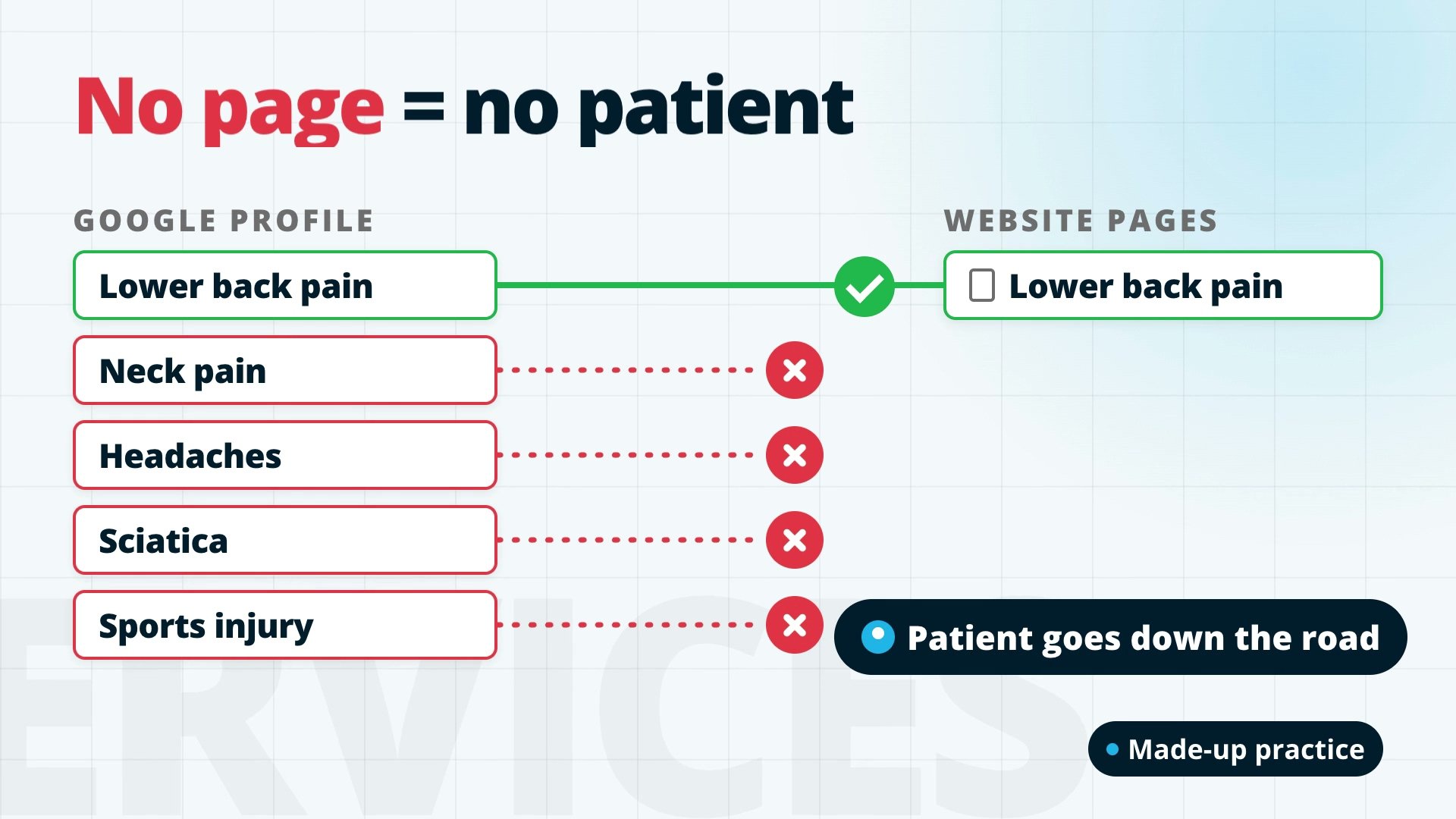
On your Google Business Profile there’s a list of services. Google lets you list around 30. He had about six.
What Google wants is simple. Every service on your Google profile should have its own page on your website, and the two should be linked.
When you do that, Google sees: “They say they treat lower back pain on their profile. Here’s a page on their website about lower back pain. The two are linked.” So Google believes you, and it shows you to the people searching for it.
List a service with no page behind it and Google doesn’t believe you. It sends that patient to the chiro down the road who did build the page.
He’s not the only one. Of the last eight practices I sat down with, seven had this exact problem. If you take one thing from this post, take this one, because almost none of your competitors are doing it. Their SEO companies never told them.
Open your Google profile now and count your services. Then check your website has a page for each one, and that each service links to its page.
Fix 3: A page for every service, condition and suburb people search for
Every page about something people search for gets you shown to more people.
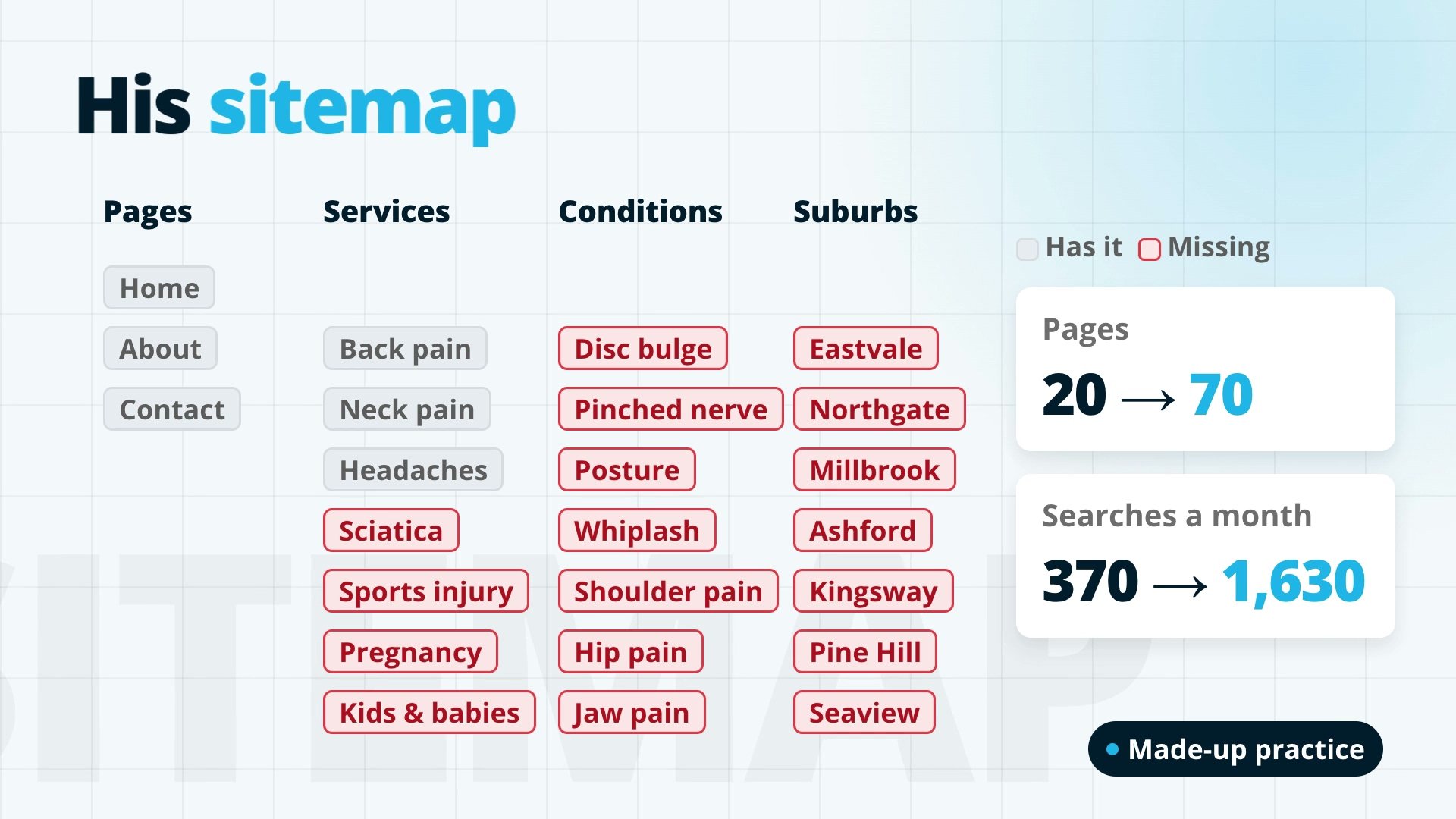
Roughly, with 10 pages you might qualify for about 300 searches a month across Google and ChatGPT. With 100 pages it’s more like 1,800. Those people won’t all visit your site, but your site gets shown to every one of them, and that’s where new patients come from.

He has about 20 pages today. The sitemap I made for him adds the services, conditions and suburbs around him where real people search every month. That takes him to about 70 pages, and from about 370 searches a month to about 1,630.
The waiver for one suburb page
His clinic sits in a suburb with about 15 others around it. He asked his agency for pages for those suburbs.
They wrote back saying Google doesn’t like location pages that aren’t your physical locality. Then, very reluctantly, they offered to build one page for one suburb, if he signed a waiver saying that if Google punished him, it was on him.
A waiver. For a web page.
So is it true? Will Google punish you for a suburb page?
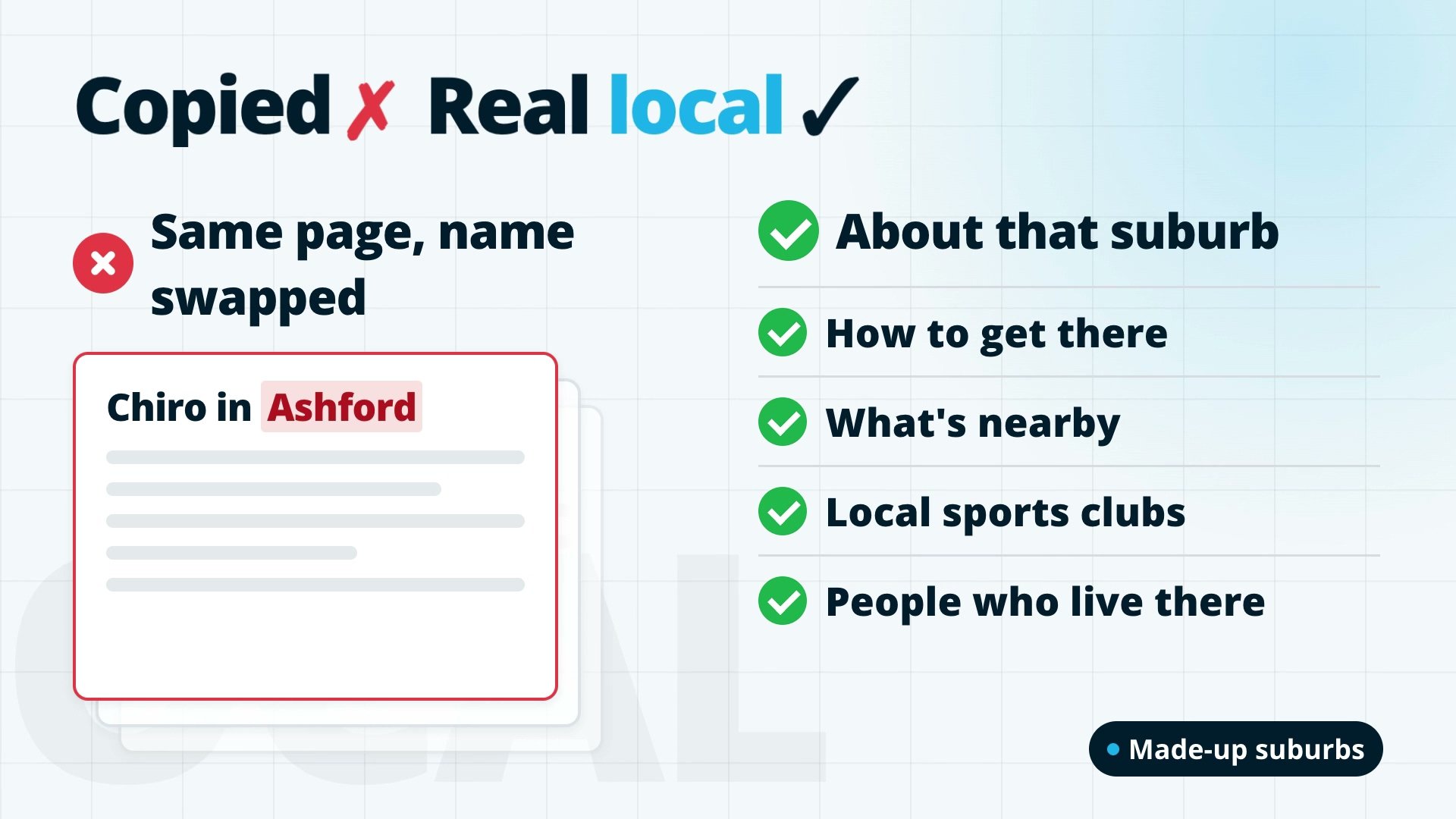
Google hates suburb pages that are the same page with the name swapped. Copy one page 20 times, change the suburb, done. That gets you in trouble, and that’s what most agencies build.
A suburb page that’s actually about that suburb is fine. How to get there, what’s nearby, the local sports clubs you look after, the people who live there. Google wants that page because it’s useful.
So why do agencies say no? At $1,000 a month they don’t have the time to write 15 unique pages properly. So they tell you Google doesn’t like it.
Fix 4: Make booking easy
Once the pages bring people in, he was still losing them at the last step.
A patient clicks Book Online. It opens the contact page, not a booking page. The real booking link is hidden on that contact page and sends them off to a separate booking system. More screens, more clicks.
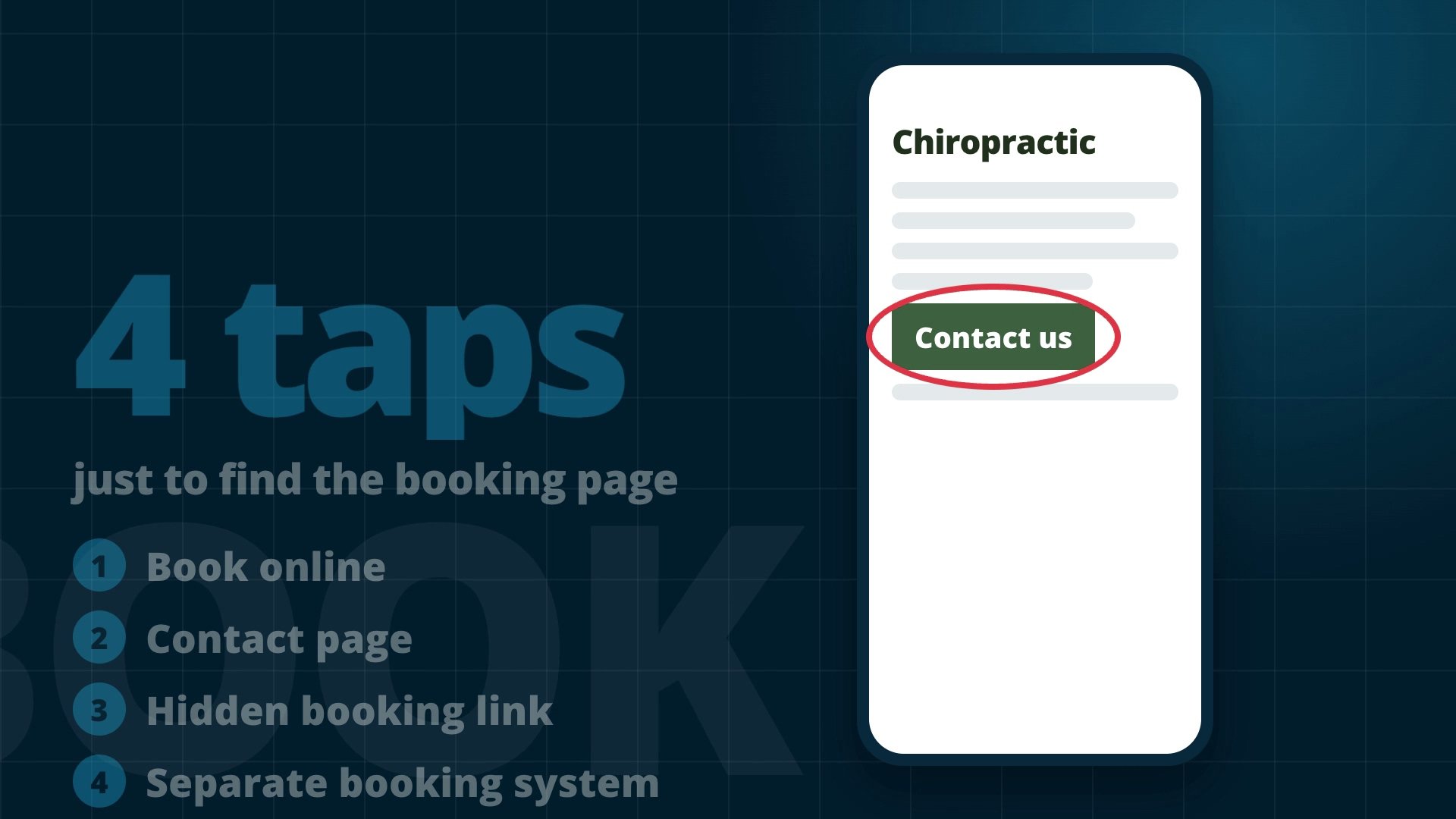
And his main chiropractic page has no Book Now at all. Just Contact Us. Someone with lower back pain found your page, they’re ready, and you ask them to send an email.
The fix:
- A Book Now button on every service page.
- On mobile, a call button and a book button that stay on screen.
- Where you can, the booking system inside your website, so they never leave it.
Fix 5: Spend in the right order (the New Patient Growth Ladder)
His next question was the one I bet you’re asking: “So do I need the SEO and the ads or not?”
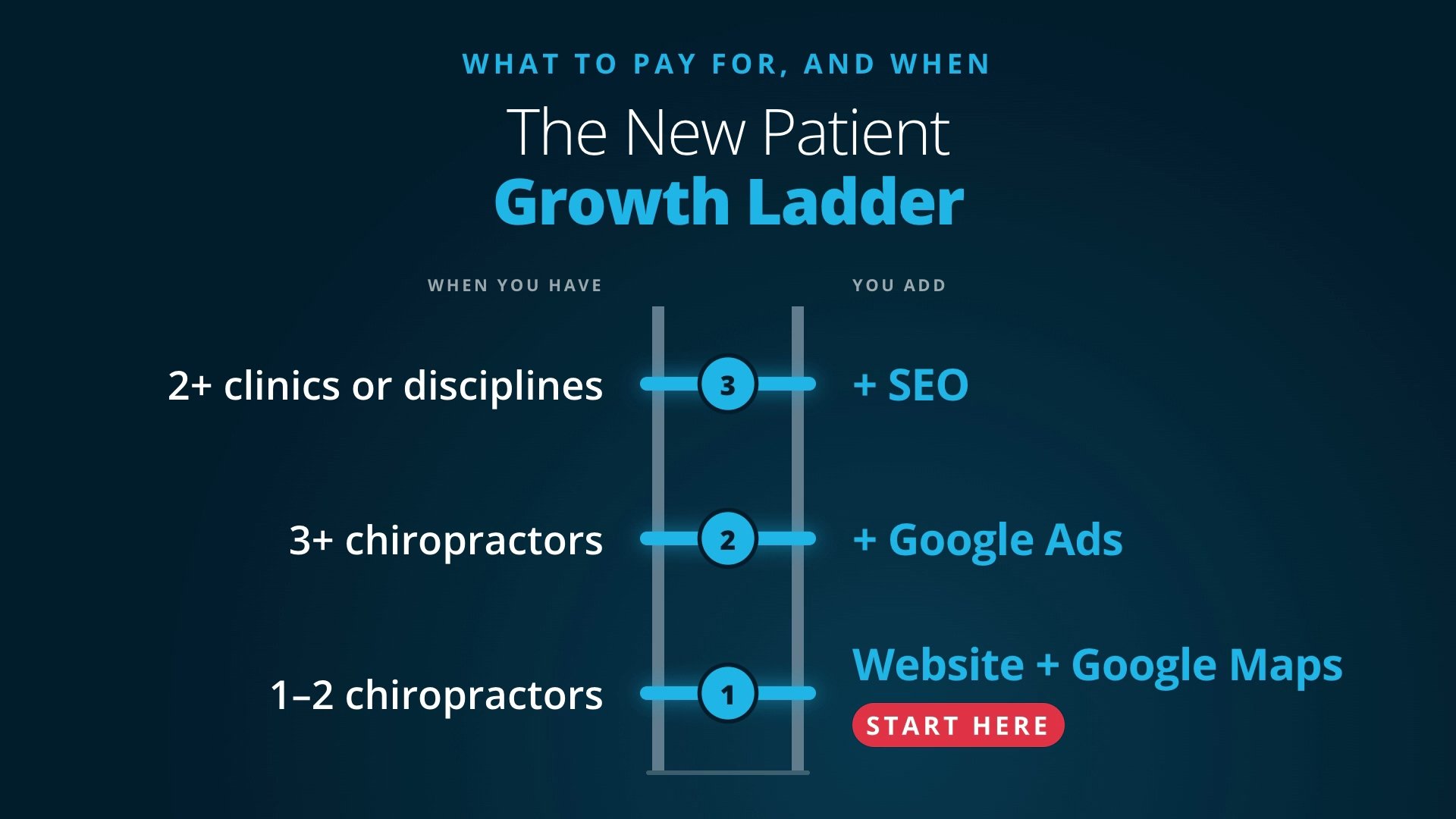
This is the order we tell every practice to spend in (I go through it rung by rung in why most practices shouldn’t buy SEO):
- Your website and Google Maps. With one or two practitioners, that’s all you need, with no ongoing SEO.
- Google Ads, when you’re adding practitioners and need more volume, and only once step one is fixed. If your website doesn’t convert, Google charges you more for every click. A bad website makes your ads cost double.
- Ongoing SEO, for practices with two or more clinics or lots of disciplines under one roof. That’s when Google gets confused and needs ongoing help.
For him right now, the ads cost $1,000 a month and bring nothing. Get the website and Google Maps right, then bring the ads back when the associate starts and the site is ready to turn clicks into bookings.
The clinic that fired us
He said one more thing I hear on almost every call: “Marlon, every agency promises the world.” He’s right. So don’t believe me either. Believe the number.
Another chiropractic clinic was doing exactly what he’s doing. Paying for SEO, paying for Google Ads, and the website wasn’t bringing them what they wanted.
We sat down with the owner and interviewed him. We do that with every client, because what makes you different is in your head, not on your website. Something came out: a lot of his patients were shift workers, and he loved dry needling. Dry needling wasn’t even on his website.
So we said: why don’t you be the dry needling clinic for shift workers? Hardly anyone in his area was doing it. We rebuilt the website around it.
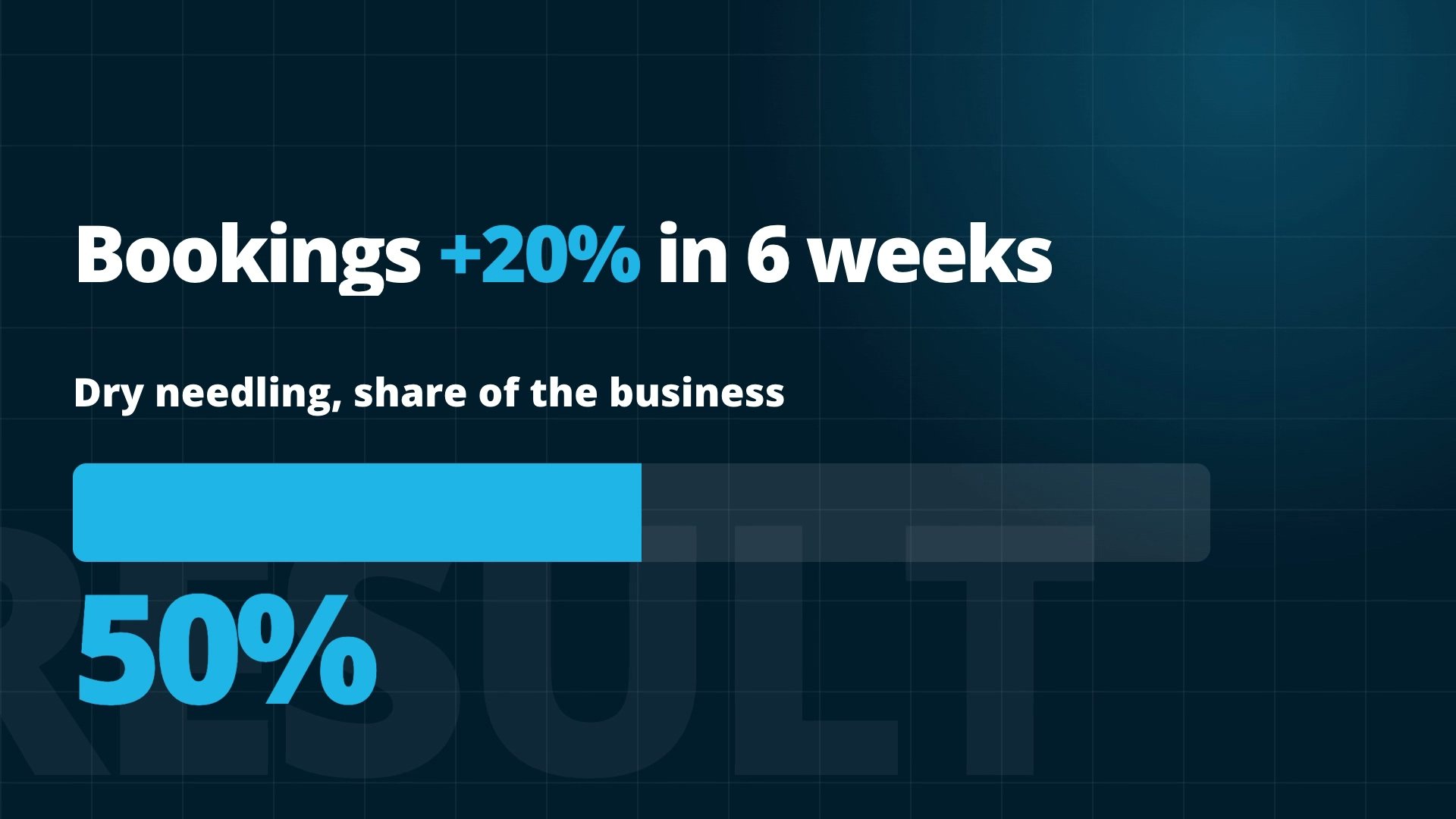
- Within about six weeks, bookings were up around 20%.
- Dry needling went from about 10 to 15% of his business to 50%.
- A few months later he called and said: “Guys, we’re fully booked. We’re not continuing with the SEO, and we’re not doing Google Ads anymore.”
We lost him as an SEO client, and honestly it’s the best result we’ve ever had. He paid a one-off fee for the website, no retainer, and his books are full. That’s what a website is supposed to do.
The five fixes, quickly
- Ask your agency for one number: new patients.
- Every service on your Google profile gets its own page, linked.
- Build a page for every service, condition and suburb people search for, and make each one unique.
- Book Now on every page.
- Website and Google Maps first. Ads when you’re adding practitioners. Ongoing SEO only with more than one clinic.
If you’re paying for marketing and can’t point to the new patients it brings in, book the call below and I’ll show you where they’re going.
Questions practice owners ask
Will Google punish me for having suburb pages?
Not for a real one. Google penalises the same page copied 20 times with the suburb name swapped. A page that's actually about that suburb (how to get there, what's nearby, the local clubs you look after) is useful, and Google wants it.
How many services should I list on my Google Business Profile?
Google lets you list around 30. List every service you really offer, then make sure each one has its own page on your website and the two are linked.
Do I need ongoing SEO for a chiropractic clinic?
With one or two practitioners, usually not. Get the website and Google Maps right first. Ongoing SEO earns its keep when you have two or more clinics or lots of different disciplines under one roof.
When should I run Google Ads?
When you're adding practitioners and need more volume, and only once your website turns visitors into bookings. If the site doesn't convert, Google charges you more for every click.
What should my marketing agency report to me every month?
One number: how many new patients their work brought you. Clicks, impressions and likes don't pay the rent.
Ready to find your missing patients?
Book your free New Patient Growth Call
45 minutes on Zoom. Before the call I go through your website and your Google profile. On the call I show you the pages you're missing and how many searches each one could bring in. You keep the plan whether you work with us or not.
Book your Growth CallNot ready for a call?
Watch how it works first
A short video on why practices with no SEO retainer are getting more new patients from Google and ChatGPT.
Watch the video